Prices are estimates. How we get them

Hot-tire resistance, flake that hides dust, and an honest no when a slab is still pushing moisture after a monsoon. Photo estimates across the Valley.
Call Get a free quoteA Phoenix garage is an oven that happens to have a roof. Cars sit on driveways well past 110 degrees and then roll onto the coating. If the top coat was a bargain or the cure was rushed, those tires pick the floor up in two dark rectangles. Hot-tire resistance is not a slogan here. It is the spec.
Monsoon weeks flip the problem. Humidity spikes, wind drives rain under garage doors, and slabs that seemed dry in May show vapor drive in August. A local pro would rather delay a metallic floor than watch it blister. Dust is the everyday third issue: it is fine, constant, and ugly on a solid color that looked perfect at noon.
Tropical Storm Rachel is forecast to cross the region this weekend, and Phoenix and the rest of the Valley could see heavy, monsoon-style downpours and gusty wind. Rain like that can flash-flood washes and low streets fast, and wind can knock out power for hours. Before it arrives, charge phones and power banks, set aside drinking water, keep a flashlight and weather radio handy, and never drive into a flooded road. For backup power, water, light, and first-aid gear, see the Storm & Survival Shop at Landforms USA.
Local pros travel to the slab. There is no published street address. Send the city — Mesa is not the same job as a north Scottsdale casita.
The core Valley job. Full flake hides dust and tire shadow and carries a top coat chosen for hot tires. Solid color is for people who will actually rinse the dust.
Guest casitas and conditioned rooms can take a metallic or a cleaner solid coat. They are not the stall that parks a truck at 3 p.m.
West Valley shops and RV garages in Surprise and Goodyear are larger and hotter. Ventilation and cure temperature get discussed before color.
A covered patio that stays shaded can take a decorative coat. A fully exposed slab in full sun usually should not. A local pro will say which yours is.
Small retail and office floors in Chandler and Scottsdale need easy cleaning and a schedule that respects business hours.
Gilbert, Queen Creek, and Buckeye slabs are young. Coating them before they are ready is how blisters start. Local pros ask the pour date.
The coating has to tolerate a tire that just crossed a driveway in July. That is a product choice and a cure window, not a wish.
Flake hides the film that settles every afternoon. A gloss solid shows it. Both are valid if you know which mess you prefer.
A sealed floor keeps wind-driven rain from soaking the slab. It does not fix a garage that was graded to drain inward.
Valley garages are workshops, gyms, and parking, often all at once. The texture has to match that, including grip when the floor is wet.
Example finishes only. None of these photos are claimed as Phoenix installations. Your slab gets its own quote.


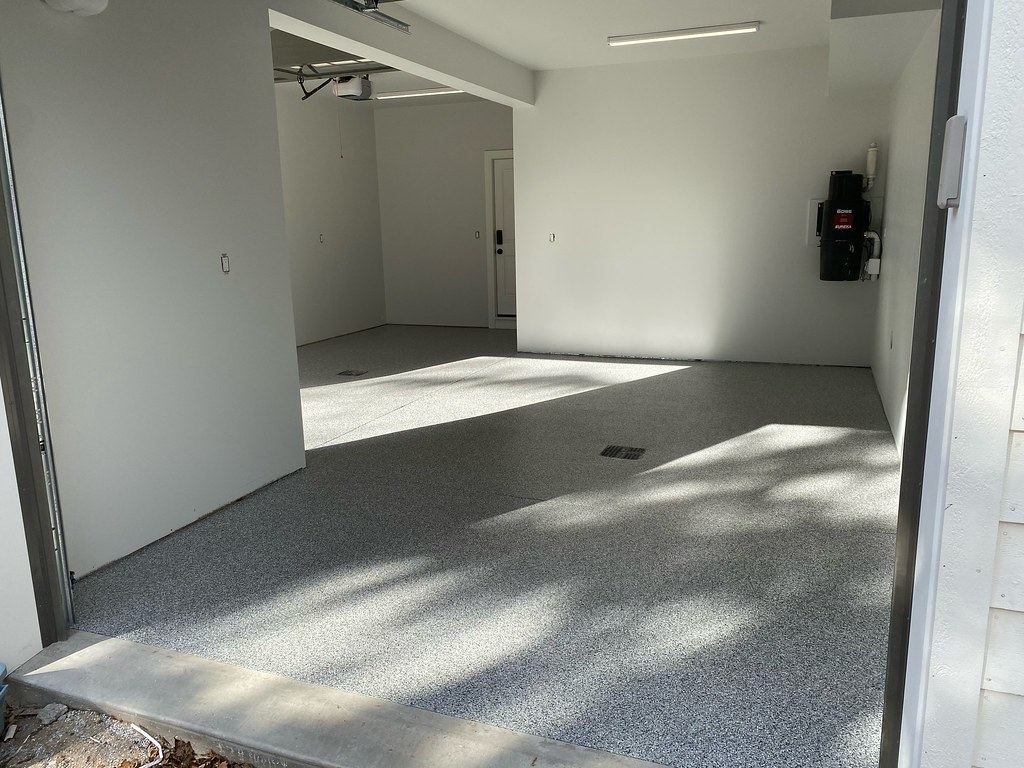

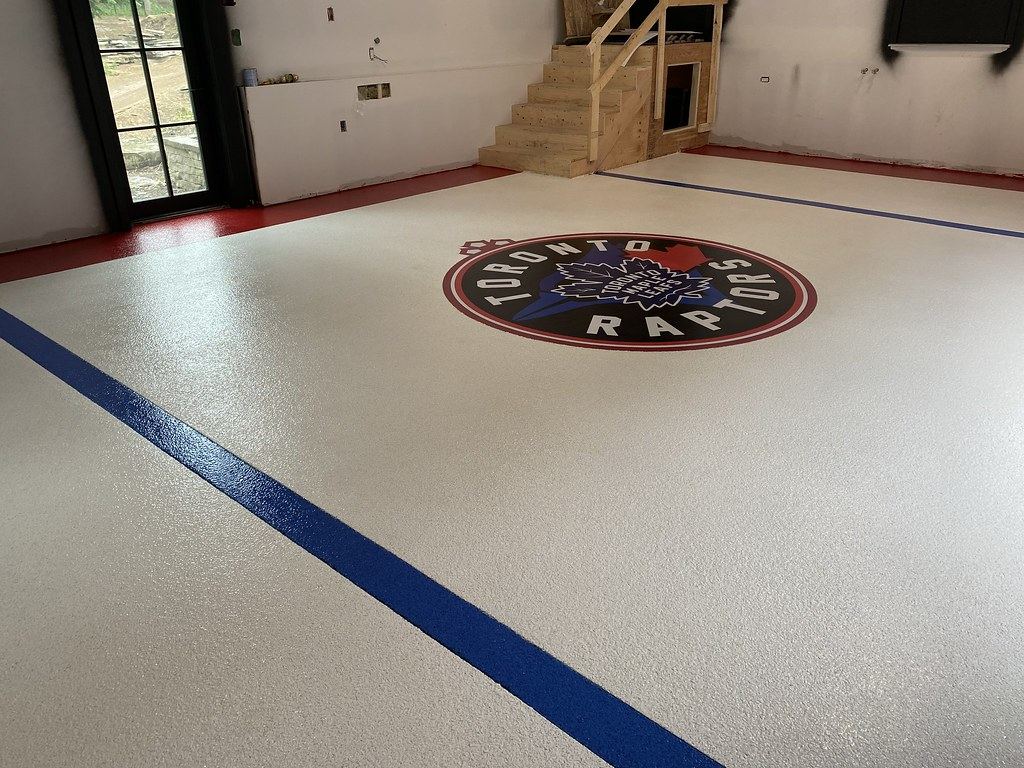
These photos are examples of flake, metallic, and solid systems. They are not claimed as jobs in Phoenix. Color is chosen for your slab.
Full broadcast flake is the Valley garage default. It hides dust and gives the top coat a body that handles heat better than a thin paint.
Casitas, gyms, and some shops want a calm field. In an open garage it will show every footprint. That is a choice, not a defect.
Metallic floors are for conditioned rooms. A garage that hits the outdoor temperature by noon is the wrong canvas.
Rinse dust before it turns to mud, keep kickstands on pads, and do not drag a trailer jack. The sun will do enough work. You do not need to help it.
Hot-tire pickup is the main Phoenix failure of cheap coatings. Local pros spec a system and a cure time meant to prevent it. Driving on the floor early undoes that.
Sometimes. If the slab is pushing moisture, local pros wait. A blistered metallic floor is more expensive than a delay.
They can. Local pros watch slab temperature. Early mornings in summer are often the workable window.
No street address. The work happens at your slab. Start with a photo.
They are examples of flake, metallic, and solid systems, not a portfolio of Valley jobs.
A coating can look smooth on top and still be weak underneath. If grinding leaves sealer, oil, curing residue, or a dense surface behind, the new layers may not bond well. Moisture vapor can also push upward through concrete and cause bubbles or broad areas of separation. Once the coating lets go, the repair usually starts with removing more than the visibly damaged spot.
A sound inspection looks beyond the surface. Calcium chloride testing estimates moisture vapor emission at the surface; in-slab relative humidity testing measures conditions inside the concrete. Results depend on the test method, location, and conditions, so they need to be interpreted against the coating system’s limits. A quick visual check or a piece of plastic taped down cannot replace a proper moisture evaluation.
Cracks and control joints need different decisions. A crack may be filled or repaired, but a moving crack can reopen through a rigid coating. Control joints are intentional breaks in the slab; filling or coating across them without a plan can lead to a visible split. Good preparation identifies these details before the coating is chosen, rather than hiding them under color.
A failed floor can mean grinding off the coating, collecting and disposing of the dust, repairing the concrete, and starting the surface preparation again. The garage or room may be out of use while each layer is removed and reapplied. That is why a low bid that skips testing or preparation can become expensive in labor, disruption, and lost use, even without a change in the slab itself.
Ask each contractor to describe the preparation in writing. Diamond grinding mechanically removes weak surface material and creates a consistent profile for bonding. Acid etching is not an equivalent shortcut: it may leave contaminants or an uneven profile and does not reliably remove old coatings or sealers. Ask what concrete surface profile the system requires and how the crew will confirm the slab is ready.
The quote should explain how moisture will be checked and what happens if results fall outside the coating manufacturer’s limits. Ask whether cracks, spalls, oil spots, and control joints are included, and which repairs are separate. A clear scope distinguishes surface preparation from coating layers. It also says whether a primer is used and what conditions make the contractor stop or reschedule.
Get the layer sequence, not just a finish name. A typical system may include prepared concrete, a compatible primer, a base coat, broadcast flake where selected, and a protective top coat. Ask how much flake is broadcast, whether excess is scraped and vacuumed, and what the top coat is intended to resist. The materials must be compatible as a system, not just individually familiar names.
Ask for written application and return-to-use windows, plus the temperature and humidity limits for the slab and air. Clarify how the crew checks slab temperature and whether condensation is a concern. Confirm what the price includes, how the floor will be protected during cure, and what cleaning instructions apply afterward. A useful quote answers these questions before work begins, not after a problem appears.
Epoxy is often used as a primer or base layer because it can bond well to properly prepared concrete and allows time to place decorative flake. It is not automatically the best exposed finish. Many epoxy formulations can amber with ultraviolet exposure, and the degree varies. Ask whether the system has a UV-stable top coat and whether direct sunlight will reach the floor.
Polyaspartic top coats can offer quicker return-to-service and better color stability than many epoxies, but fast cure leaves less time to apply and spread the material. Temperature affects working time, and hot concrete can make that window shorter. The installer needs to match the product and crew pace to the slab conditions, rather than assuming a quick cure makes every installation easier.
Polyurea is a family of coatings with formulations that can cure quickly and may offer flexibility. It is not one uniform product, and its performance depends on the formulation, thickness, preparation, and compatible layers beneath it. Ask what role it has in the system, how it handles sunlight and hot tires, and whether the application limits suit your garage or shop.
For an open garage, prioritize a system tested for the expected tire heat, sun exposure, and use, with a documented cure schedule. A conditioned room, basement, or commercial space may have different moisture, cleaning, traffic, and downtime needs. Compare complete systems rather than labels alone. The right choice is the one whose preparation, layer compatibility, exposure limits, and maintenance fit the actual slab.
Testing should be planned before coating, after the slab is accessible and prepared as required by the test method. Calcium chloride and in-slab relative humidity tests measure different conditions, and results can vary across a floor. Ask which method is being used, where readings will be taken, and how results affect the system choice.
No. A repair can improve the appearance of a stable crack, but movement may cause it to show again. Control joints are designed to accommodate slab movement and usually need a deliberate treatment rather than being treated like ordinary cracks. Ask how each joint will be handled and what appearance to expect.
Grinding mechanically prepares the surface and can remove weak concrete or existing residue when performed correctly. Acid etching may not remove sealers, oil, or old coating, and can leave an inconsistent profile. The required profile depends on the coating system, so ask how the contractor will verify preparation before applying material.
Not every system uses a separate primer, but the specified layers must be compatible with the slab and with one another. A primer may help with adhesion or provide a suitable base for later layers. Ask the contractor to identify the full layer sequence and explain any omitted layer in the context of the system.
It can. Many epoxy finishes may amber with ultraviolet exposure, while UV stability varies among top coats and formulations. Ask whether sunlight reaches the floor and which layer is intended to protect the color. A UV-stable top coat can help, but it does not make every coating completely immune to color change.
Yes, the finish can include texture or an additive intended to improve traction, but more texture can make cleaning harder. The right balance depends on whether the floor is a garage, work area, or customer space and how often it gets wet. Ask to review a sample and discuss cleaning along with grip.
Follow the installer’s care instructions for the specific top coat. In general, remove grit before it is tracked around, use a suitable cleaner, and avoid harsh chemicals unless the system permits them. Use pads under metal stands or sharp equipment, and lift heavy items rather than dragging them across the finish.
The floor may feel dry before it is ready for vehicle tires, heavy equipment, or cleaning. Each layer has application, recoat, and cure windows that depend on the product and site conditions. Get separate written times for light foot traffic and full use, and follow the longer period if conditions slowed the cure.
Tell us the city and send a photo that includes the garage door, so a local pro can see sun exposure. Mention if water has come in during a monsoon.
Phoenix Epoxy Floors is an independent referral service that connects you with local epoxy flooring pros.
Open this site on your phone

Phoenix Epoxy
phoenixepoxygarage.com
Point your phone camera at the code